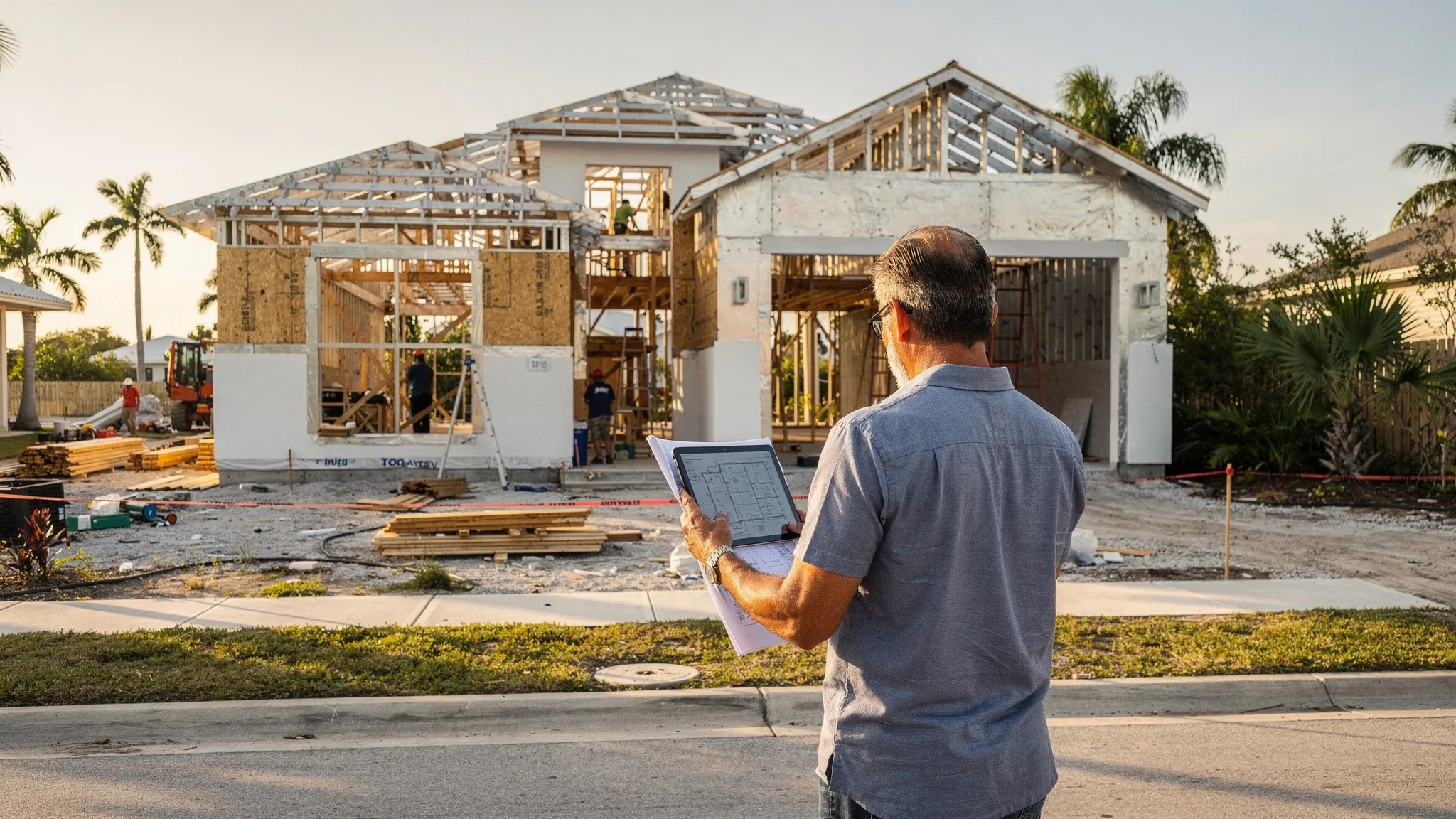
A New Home Moves Through Many Steps
A new home moves through many steps. Work may begin with plans and site work and end with final tasks.
The order and names can change by builder, project, home, and local rules.
Focus on the home's current stage and the work that still remains.
VARIABLE BY BUILDERVARIABLE BY PROJECTVARIABLE BY JURISDICTIONUse Broad Milestones, Not a Universal Script
These are broad stages. A project may group, rename, or complete them in another order.
- Site preparation.
- Foundation work.
- Framing or structural work.
- Roofing and exterior enclosure.
- Rough plumbing, electrical, HVAC, and other systems.
- Insulation and drywall.
- Interior finishes.
- Exterior and site completion.
- Required inspections.
- Final walk-through and closing preparation.
Buyers may not be allowed on an active job site at every stage. Use the builder's approved access process.
Not Every Date Has the Same Meaning
A timeline can help you plan, but an estimate is not a promise by itself.
A sales estimate is not a contract date. A lender date, city milestone, and work stage are different too.
- Ask where the date appears.
- Ask whether it is written into a contract.
- Ask what qualifiers apply.
- Ask what events may change the timing.
- Ask what notice process applies.
Many Variables Can Affect Progress
No single factor must cause a delay, and not every change means something went wrong.
- Permit timing.
- Municipal inspections.
- Weather.
- Material availability.
- Labor availability.
- Utility work.
- Site conditions.
- Approved design changes.
- Builder sequencing.
- Project-specific government requirements.
A contract may cover other events. Ask a Florida real estate attorney what a clause means for your deal.
Ask What the Specific Home Has Reached
A milestone can show what work is done and what still needs to happen.
- Permit issued, when relevant.
- Foundation complete.
- Framing or structural work complete.
- Dry-in or enclosure stage.
- Rough systems complete.
- Drywall complete.
- Finishes underway.
- Final inspections pending.
- Closing preparation underway.
These are broad examples, not one set order for every home.
Several Months Is Planning Information, Not Proof of a Deadline
A Florida buyer hears that a new home may be ready in a few months.
The buyer does not treat the estimate as a promise. The buyer asks what stage the home is in and what work remains.
The buyer asks which city inspections remain. The buyer also asks if the contract has a set date or deadline.
The point is not to expect trouble. It is to keep planning facts apart from contract duties.
A Precise-Sounding Date Can Still Be an Estimate
A date can sound precise even when the process behind it is still changing.
Ask instead: What stage is the home in, what remains, and which document controls the timing?
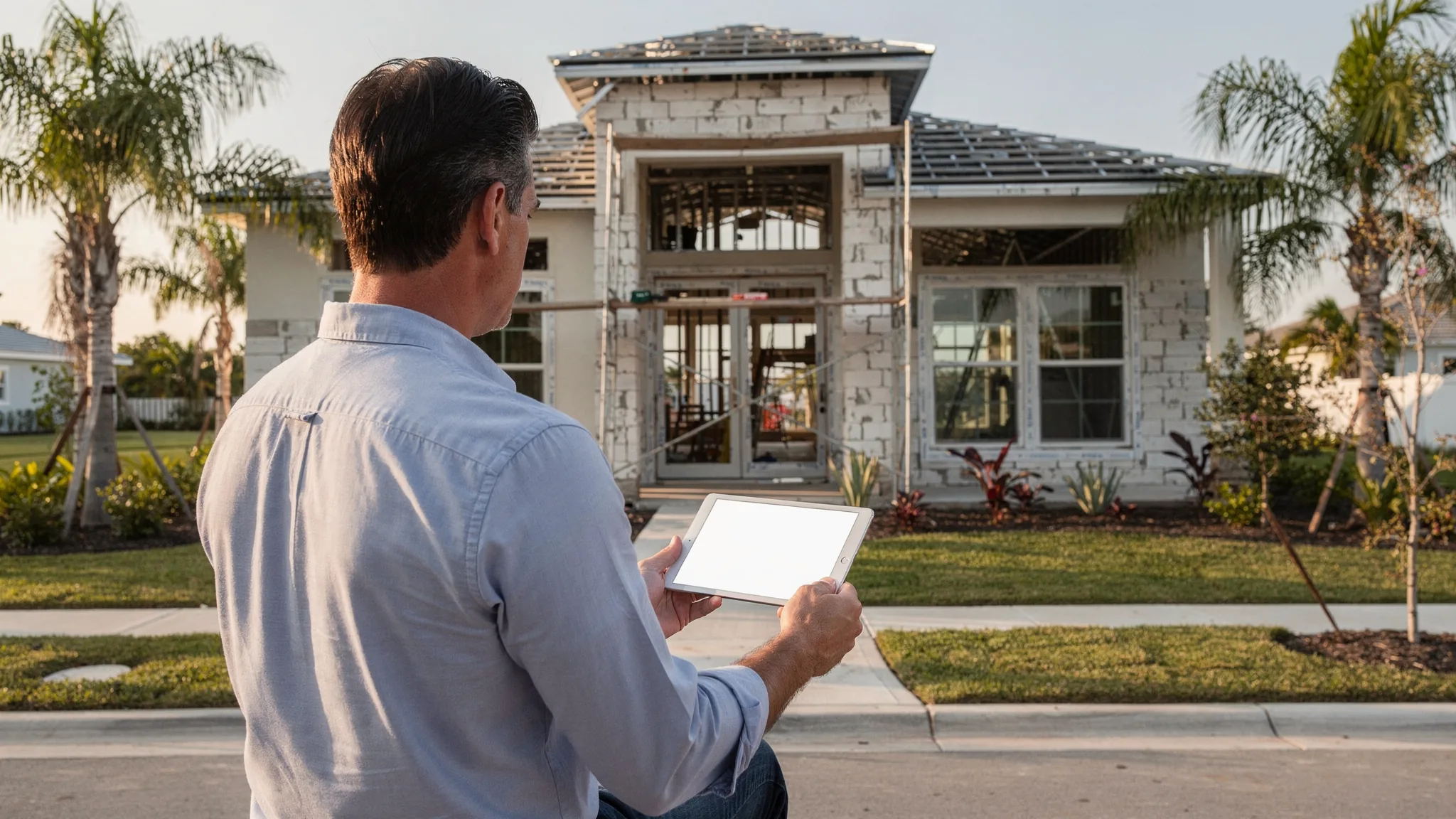
What a Buyer May Learn at Different Points
Permitting and early site work
May be happening: permits, site work, and early building work.
Possible source: builder's contact or local records, when available.
Still unclear: exact future timing.
Structure and enclosure
May be happening: framing, roofing, windows, or exterior enclosure.
Possible source: what you can see from an approved area and builder updates.
Still unclear: systems, finishes, inspections, and timing.
Systems and interior work
May be happening: rough systems, drywall, insulation, and inside finishes.
Possible source: builder updates and local inspection records, when available.
Still unclear: finish date and approvals that remain.
Final preparation
May be happening: final work, inspections, walk-through plans, and closing prep.
Possible source: builder, local records, lender, attorney, or inspector, based on the question.
Still unclear: closing terms until they are verified.
Build a Clear Timing Picture
- Current physical construction stage.
- Permit status when relevant and available.
- Inspections completed.
- Inspections remaining.
- Builder-provided schedule.
- Written contract timing.
- Lender expiration dates or update requirements.
- Insurance timing.
- Planned walk-through process.
- Closing preparation steps.
Not every buyer can see every record. Ask the right source what is available.
Construction and Financing May Move on Different Clocks
Getting approved is not the same as being ready.
A loan file may need updates as time passes. Rates can change. Some documents and insurance details may need updates too.
A delay can affect loan steps. It does not decide the buyer's legal rights under the contract.
Ask the Right Source
Builder's authorized representative
- What stage is this specific home in today?
- What major milestones remain?
- Which inspections are complete?
- Which inspections remain?
Florida real estate attorney
- Is this completion date an estimate or a contractual date?
- Which document controls the timing?
- What does the contract say happens if an estimate changes?
Lender
- Does my financing approval have any timing limits or update requirements?
- When should I update my loan documents or financing file?
Local building department
- What permit or inspection records are available for this property?
Licensed home inspector
- When an inspection is permitted, what can you independently evaluate at this stage?
Insurance professional
- When should I update or arrange property-insurance information for the planned closing?
Check the Main Idea
Choose an answer, then read the explanation. You can try again.
Practice a Clear Timing Question
Plan With Milestones, Then Verify the Controlling Date
Use the work stage to track progress. Use the right document and expert to check any binding timing duty.
