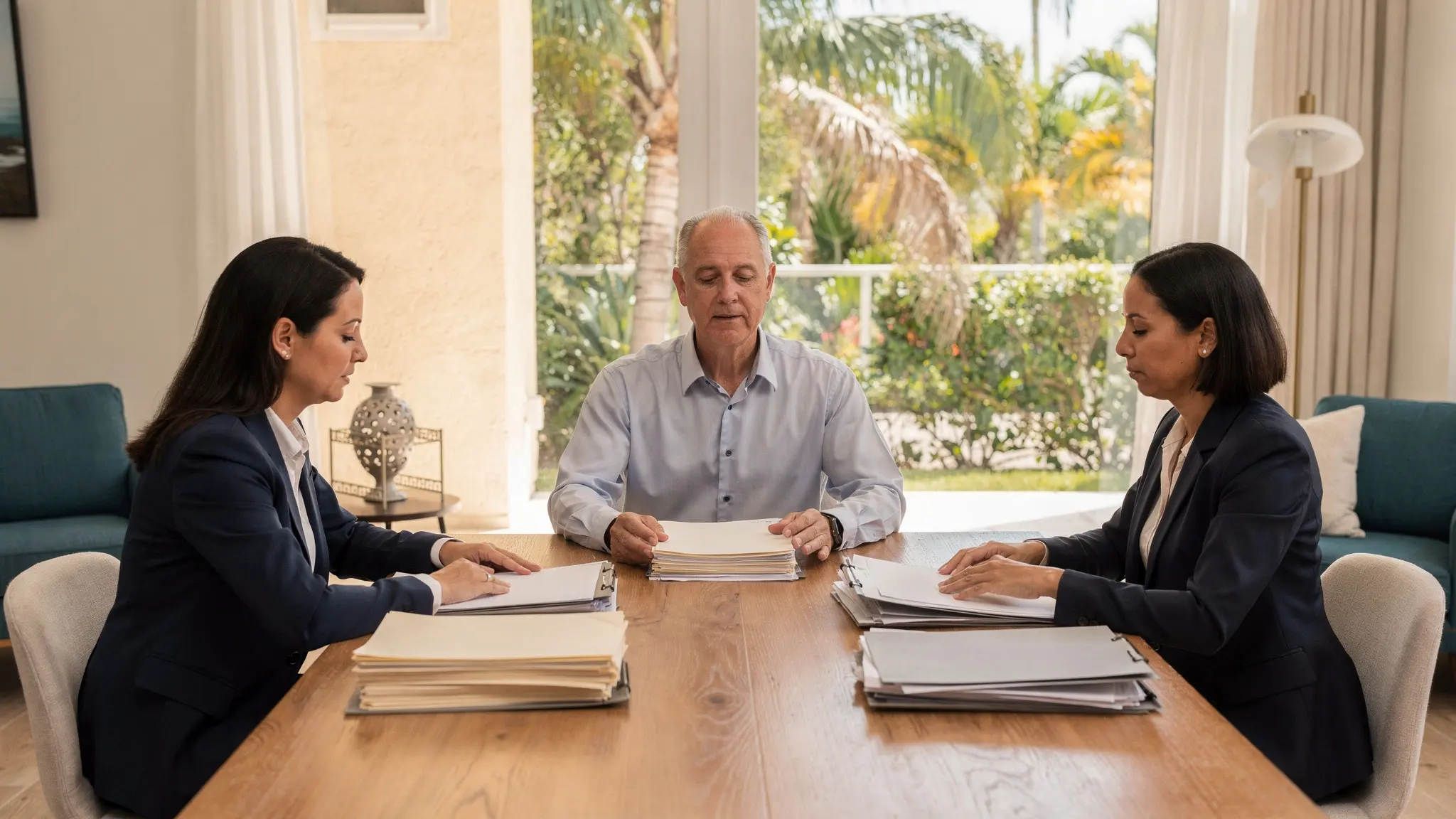
Practical Control Is Not Always Legal Authority
A personal or court-related change may affect the property. The exact records still guide the next step.
One person may live in the home, pay the mortgage, or manage repairs. Another person may appear on the deed or court record.
Those facts can explain daily responsibility. They do not decide ownership, signing authority, or title status.
Different systems may overlap. Deed, divorce, bankruptcy, guardianship, mortgage, and title records may all require review.
Moving Out Does Not Transfer Ownership
A separation may change who lives in the home. It does not automatically change the deed or decide who may sign.
Professional review may involve:
- the current deed and prior deeds;
- the divorce petition and final judgment;
- the marital settlement agreement;
- court orders and property-distribution terms;
- mortgage obligations and title records;
- recorded transfer documents;
- homestead and transaction-signature questions.
Ask a Florida family-law or real estate attorney to review legal meaning. Confirm current title requirements with a title or closing professional.
A Case Status Does Not Answer Every Property Question
A bankruptcy record may raise questions about timing, authority, liens, proceeds, or court involvement.
- whether the case is open or closed;
- which bankruptcy chapter applies;
- whether a trustee or bankruptcy estate is involved;
- whether court approval may be needed;
- whether an automatic stay may affect action;
- whether liens, discharge, or abandonment records matter;
- which title requirements remain open.
A discharge does not automatically answer every lien or title question. Ask a qualified bankruptcy attorney to review the current case record.
Court Authority Must Be Read From the Current Record
A guardianship or other court order may describe duties and limits. The page does not interpret those powers.
Review may include:
- the guardianship appointment;
- letters or orders of guardianship;
- the scope of authority;
- restricted powers and approval requirements;
- sale-related court orders;
- title and closing requirements.
Ask the correct Florida attorney about court authority. Use current court records rather than family assumptions.
Several Record Systems May Need to Be Compared
A professional may request several records because each one serves a different purpose.
- current and prior deeds;
- divorce petition, final judgment, and settlement agreement;
- court orders and recorded transfer documents;
- bankruptcy petition, docket, trustee, discharge, and abandonment records;
- guardianship orders or letters;
- mortgage and lien records;
- title commitment and homestead-related records;
- entity and association records.
Do not upload private family, court, bankruptcy, deed, identity, title, or financial records through this page.
One Fact Does Not Prove the Complete Answer
These facts do not prove a final legal or title conclusion:
- one spouse moved out;
- one person pays the mortgage;
- the family agrees informally;
- a divorce order mentions the home;
- a bankruptcy case appears closed;
- a guardian manages daily affairs;
- one person is speaking with the agent.
The answer can depend on the documents and current case status. Ask a Florida attorney and title professional.
Responsibility and Authority Are Different Layers
A person may have the practical responsibility for the home without having the complete legal authority to sell it. Practical control and legal authority are not always the same.

One Spouse Stayed, but the Records Still Need Review
The Practical Story
A married South Florida couple bought a home together. They later separated.
One spouse moved out. The spouse who remained pays the mortgage and believes only one signature is needed.
A divorce case exists, but the final judgment and deed have not been reviewed together.
Living in the home and paying the loan do not prove sole authority.
The Better Next Step
The owner records the deed names, divorce case, settlement records, mortgage information, and title questions.
A Florida family-law or real estate attorney may review legal effect. A title professional may review current title evidence.
The lesson does not decide who owns the home or who must sign.
Update Your Seller Ownership and Authority File
Use the file to organize facts and open questions. It is not legal analysis, title evidence, or proof of authority.
Record details
- deed names;
- current relationship status;
- divorce or separation case status;
- final judgment or settlement agreement located or missing;
- bankruptcy case and status;
- guardianship or court order located or unknown;
- mortgage and lien records;
- title and attorney contacts;
- open questions, review status, and next step.
Notes
Ask the Question in the Right Lane
Florida family-law or real estate attorney
- Do divorce, separation, homestead, deed, or court records affect who may sign?
- Did a court order require or complete a transfer?
- Which documents must be reviewed together?
Bankruptcy attorney
- Does an open or prior case affect ownership, authority, liens, proceeds, or court approval?
- Is a trustee or bankruptcy estate involved?
- Which current docket records matter?
Title or closing professional
- Which owners and recorded matters appear in the title search?
- Are divorce, bankruptcy, guardianship, lien, or court records relevant?
- Which signatures or documents require clarification?
Court or bankruptcy clerk
- Which public docket records are available?
- How can certified copies be requested?
Mortgage servicer
- Which borrowers appear on the current loan?
- What payoff information is available?
- What authorization is needed to discuss the loan?
Check the Main Idea
This is not a test. No grades. Take your time.
- Yes.
- No. Deed, court, and title records may still require review.
Show the teaching answer
Answer: B
Occupancy and ownership are different questions.
- Yes.
- No. Payment shows responsibility, not complete legal authority.
Show the teaching answer
Answer: B
Loan payment and signing authority are different questions.
- Yes.
- No. A qualified attorney and title professional may need to review the current record.
Show the teaching answer
Answer: B
Different records may have different effects and review needs.
Organize What You Recognize
The Module 2 Review checks recognition and organization. It does not determine ownership, authority, title, bankruptcy status, or legal readiness.
The review remains an accessible non-link until route authority permits activation.
Carry This Forward
Practical responsibility and legal authority are not always the same.
Can you explain why deed, court, bankruptcy, and title records may need review together?
Add every known record to your Seller Ownership and Authority File. Mark each open question for professional review.
The Module 2 Review checks recognition and organization. It does not make a legal or title decision.
This course is educational. It does not determine:
- divorce, marital, separation, or homestead rights;
- bankruptcy, automatic-stay, discharge, lien, or trustee outcomes;
- guardianship or court authority;
- ownership, signing authority, or title status.
Ask the correct Florida attorney about legal questions. Confirm title requirements with a title or closing professional.
