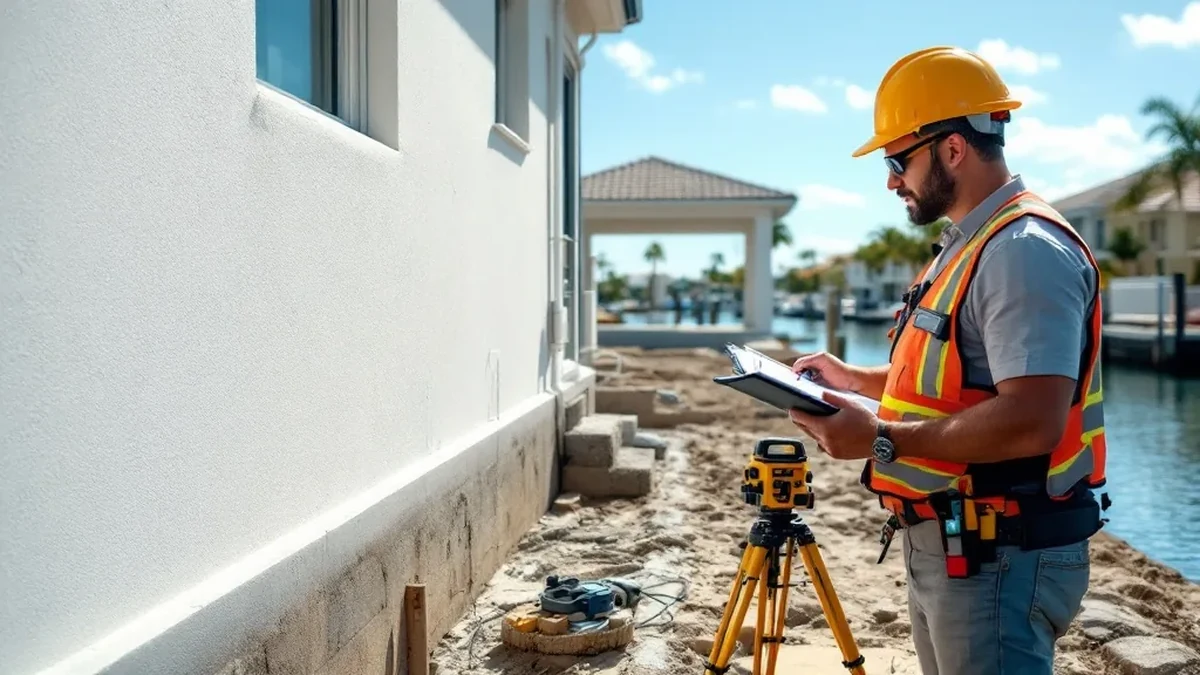
Start With the Exact Address and Parcel
A neighborhood name is not enough. Check the exact address, parcel, building, and policy.
Two nearby homes can have different height, drainage, tide risk, claims, and policy terms.
The map shows one kind of risk. The home, street, tide, drainage, and policy complete the picture.
Use the Current Flood Map
Broward County says the current FEMA maps took effect on July 31, 2024. Search the exact property.
“Special Flood Hazard Area,” “Zone AE,” “Zone VE,” “Zone X,” “base flood elevation,” or another mapped label.
The label shows mapped flood risk. It does not show every street, drain, tide, or building problem.
- Search the exact address or parcel.
- Confirm the map effective date.
- Save the panel and zone used.
- Ask whether a map change affects the home.
- Do not assume Zone X means no flood risk.
Find the Elevation Records
Fort Lauderdale provides height records when available. A survey may show other lot and building facts.
- Elevation certificate: ask whether the city, seller, insurer, or lender has one.
- Survey: review lot lines, grade, improvements, easements, and water features.
- Finished floor: compare the building height with mapped flood information.
- Mechanical equipment: check the height of air-conditioning and electrical equipment.
- Map letters: ask whether a LOMA or LOMR affects the property.
Check King Tides and High Tides
Fort Lauderdale warns that high tides can flood low streets. Conditions can vary by street and tide.
- Review the city’s current tide guidance.
- Visit during or after a high-tide period when possible.
- Look for salt lines, pumps, barriers, or repeated road closures.
- Ask about garage, yard, and first-floor water.
- Check access routes, not only the front door.
Look Beyond the FEMA Zone
Heavy rain, low roads, blocked drains, canals, seawalls, pumps, and nearby work can change water conditions.
- Street drainage: check inlets, swales, pumps, and low spots.
- Canals and waterways: review nearby water levels and access.
- Seawalls: inspect condition, height, permits, and repair duty.
- Yard grading: see where water moves after rain.
- Past events: ask about water entry and repairs.
Review Floodplain Permits and Work
Fort Lauderdale says floodplain work needs permits. This can include building changes, grading, paving, filling, and site work.
“Floodplain development permit,” “substantial improvement,” “substantial damage,” “base flood elevation,” or “final inspection.”
Some repairs or upgrades can trigger more flood review. The rule depends on the work and current records.
- Check additions, enclosures, garages, and ground-floor work.
- Review permits for seawalls, docks, fill, and grading.
- Confirm failed inspections and later corrections.
- Check whether required final inspections are closed.
- Match the visible home with the permit record.
Separate Homeowners and Flood Coverage
Most homeowners policies do not cover rising floodwater. Flood insurance is separate.
- Homeowners policy: review property, liability, loss-of-use, and water terms.
- Wind coverage: confirm whether it is included or placed elsewhere.
- Flood policy: compare building, contents, deductible, wait time, and start date.
- Optional cover: ask about water backup, ordinance or law, and other needs.
- Total cost: add all premiums and deductibles to the budget.
Check Citizens Rules When Relevant
Citizens flood rules can change. The rule depends on the policy type, wind cover, location, and current value limit.
- Ask whether Citizens is one option or the selected carrier.
- Confirm the current flood-coverage rule.
- Check which proof the carrier requires.
- Confirm the policy start date.
- Do not rely on an old quote or old policy.
Review Wind Protection and Roof Records
Roof age, shape, straps, water barriers, shutters, impact glass, and garage doors can affect the review.
- Wind report: obtain the current form when available.
- Roof permits: confirm age, scope, and final inspection.
- Openings: match shutters or impact glass to each opening.
- Garage door: check the rating and visible condition.
- Carrier review: ask which records the insurer accepts.
Ask About Prior Water and Claims
Claims can explain roof work, water events, repairs, and policy history. A claim record is not a full inspection.
- Ask the seller about known water entry.
- Review available claim records through the proper process.
- Match major repairs to permits and invoices.
- Inspect repaired areas.
- Ask whether an open claim affects closing.
Match Coverage to the Loan and Closing
The lender may set flood, cover, deductible, and start-date rules. Closing may also require proof of insurance.
- Lender: confirm required limits and flood cover.
- Insurer: confirm payment and the policy start date.
- Closing team: confirm names and the lender clause.
- Buyer: compare required cover with the protection you want.
Build the Full Flood-Risk Budget
Add homeowners, wind, flood, deductibles, inspections, surveys, repairs, drainage work, and emergency savings.
A lower purchase price can still lead to a higher monthly cost after flood, wind, repairs, and reserves.
Use Official Fort Lauderdale and Broward Resources
Official sources help verify maps, records, and rules. They do not replace an inspection or policy check.
Questions to Ask Before You Commit
- What is the current flood zone and map date?
- Is an elevation certificate available?
- Has water entered the home, garage, yard, or street?
- How do high tides affect access?
- What floodplain permits and final records exist?
- What homeowners, wind, and flood policies are available?
- What are the limits, exclusions, and deductibles?
- What does the lender require?
- What repairs or drainage work should I budget?
- What must be active before closing?
A Calm Fort Lauderdale Flood-Risk Plan
First verify the parcel, map, height, tides, drains, permits, roof, openings, and claims.
Then compare written policies, lender rules, closing proof, and the full cost.