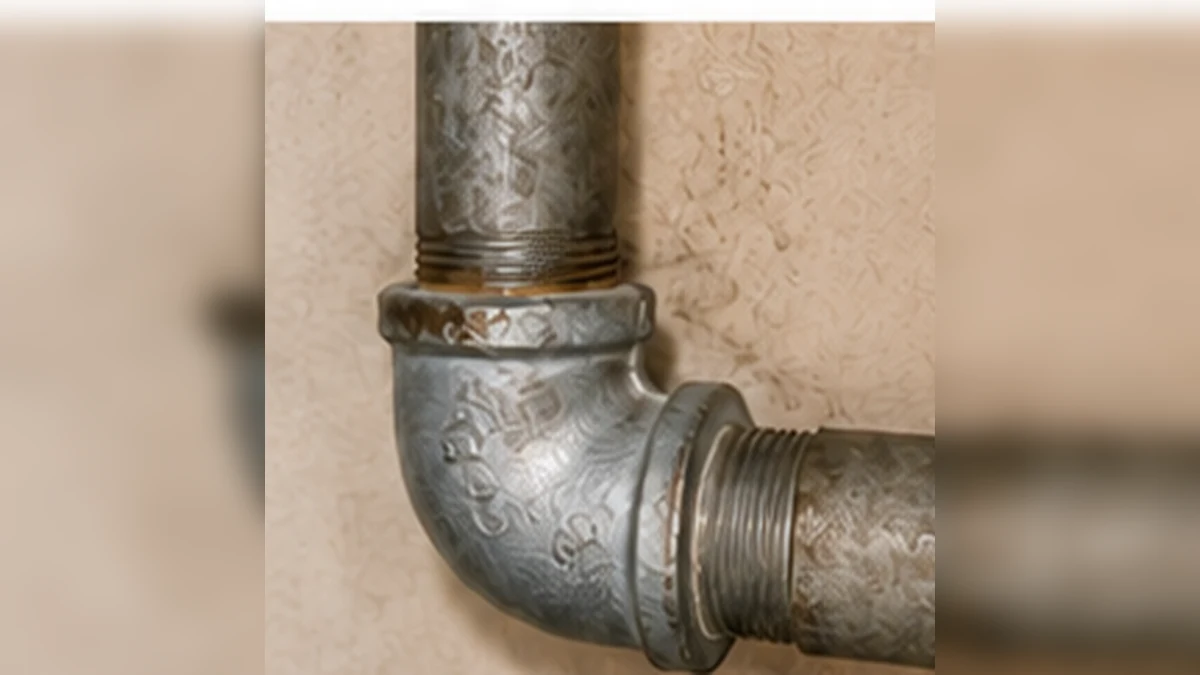
An older Florida home can have galvanized supply piping even when the faucets work during a showing. The important question is not whether water comes out for a few minutes. The important questions are what material remains, whether corrosion is affecting the inside of the pipe, whether prior work was partial, and what a licensed plumber recommends for the property.
What galvanized plumbing is
Galvanized water pipe is steel pipe coated with zinc to help slow rust. It was commonly installed in older homes before copper, CPVC, and PEX became more common. The pipe is usually rigid, metallic, and joined with threaded fittings.
A home inspector may identify visible galvanized pipe and report observable concerns. A licensed plumber is the appropriate professional to verify the material, evaluate flow and leakage, determine how much remains concealed, and prepare a practical repair or repipe scope.
Supply pipe is different from drain pipe
| System | What it does | Buyer review |
|---|---|---|
| Galvanized water-supply piping | Brings pressurized hot and cold water to fixtures. | Material, corrosion, flow, leaks, fittings, shutoffs, and replacement scope. |
| Galvanized or cast-iron drain piping | Carries used water and waste away from fixtures. | Drainage, corrosion, leakage, venting, and camera review when recommended. |
| Water service line | Connects the public or private water source to the home. | Material, routing, pressure, meter area, leaks, and utility or plumber records. |
The word “galvanized” can describe more than one plumbing component. Ask the professional to identify whether the concern involves interior supply lines, drain piping, the exterior service line, or a combination.
Where galvanized supply piping may be visible
- near the water heater, main shutoff, or utility room;
- under sinks and behind removable access panels;
- in garages, crawlspaces, attics, or unfinished areas;
- at exposed risers, hose connections, and fixture branches; and
- where the water service enters the building.
Newer pipe near a sink does not prove the whole home was repiped. A partial repair may leave older galvanized sections inside walls, above ceilings, beneath floors, or between the meter and the home.
Why buyers review galvanized pipe
As galvanized pipe ages, the interior can collect corrosion and mineral buildup. Possible signs include reduced flow, uneven pressure, rusty or discolored water after periods of nonuse, leaking threaded joints, and repeated small repairs. These symptoms do not establish the complete condition by themselves.
The concern is not that every galvanized system is failing today. The concern is that a buyer may inherit an aging, partly concealed system without understanding the remaining life, access needs, finish repairs, or insurance requirements.
What an inspection can and cannot establish
A general inspection can document visible material, active leaks, staining, corrosion, weak flow, damaged shutoffs, and observable prior repairs. It normally cannot see every concealed run or guarantee future performance.
For an older Florida home, a four-point inspection may be requested during insurance underwriting. A four-point report is not a complete plumbing design or repipe estimate. Review the Florida four-point inspection guide and ask the insurer what photographs, ages, materials, or completed-work documents are required.
What changes the scope of a repipe
| Scope factor | Why it matters |
|---|---|
| How much galvanized pipe remains | A complete system, a partial system, and a short service-line section are different projects. |
| Pipe location | Attic, wall, crawlspace, slab, and exterior routes create different access needs. |
| Home size and fixture count | More bathrooms, kitchens, hose connections, and branches can increase labor and material. |
| Finish restoration | Drywall, paint, cabinets, tile, stucco, and landscaping may be outside the plumber's base scope. |
| Permit and inspection requirements | Local requirements, plan needs, inspections, and closeout records should be confirmed. |
A useful estimate should state what pipe will be replaced, what will remain, the proposed routing and material, access assumptions, permit responsibility, fixture reconnection, testing, cleanup, and finish restoration inclusions or exclusions.
Questions for the insurance professional
- Does the carrier accept galvanized supply piping at this property?
- Is a four-point inspection or plumbing evaluation required?
- Are there age, condition, leakage, or prior-damage restrictions?
- Would a partial replacement satisfy underwriting, or is complete replacement required?
- Must work be completed before binding, before closing, or within a stated period?
- What documentation, photographs, permits, or paid invoices are required?
- Can the property-specific answer and remaining conditions be provided in writing?
Carrier rules can differ and can change. Do not assume that an old policy, seller statement, or general online answer applies to the buyer's intended carrier and policy.
Questions for the licensed plumber
- Which visible pipes are galvanized supply lines, and which are drains or service lines?
- Does the home appear fully, partially, or not previously repiped?
- What areas remain concealed?
- Are flow, pressure, leakage, corrosion, or shutoff conditions concerning?
- Would targeted repair be reasonable, or is broader replacement recommended?
- What new material and routing are proposed?
- What walls, ceilings, cabinets, tile, or exterior areas may need access?
- Are permits, inspections, testing, and closeout documents included?
- What finish restoration is included and excluded?
- What warranty applies to labor and materials?
Connect the answer to the contract timeline
Inspection, insurance, financing, permit, estimate, and repair questions may move on different clocks. A buyer should know the inspection-period deadline, insurance deadline, lender requirements, closing date, and the time needed for professional evaluation.
Possible paths may include accepting the property as-is, gathering more information, negotiating a credit or price change, requesting seller work, planning buyer work, or deciding not to proceed when the contract allows. The right path depends on the property, contract, budget, insurance answer, and professional findings.
Documents worth collecting
- general inspection report and photographs;
- four-point report when applicable;
- licensed plumber's written findings and estimate;
- prior repipe invoices, permits, approvals, and warranties;
- seller disclosures and water-damage repair records;
- written insurance eligibility and outstanding conditions; and
- final permit closeout and updated insurance documentation after completed work.
Your next calm step
First, identify whether the visible material is galvanized supply pipe and whether the system is complete or partial. Second, obtain a written scope from a licensed plumber when broader work may be needed. Third, provide the property details and professional documents to the insurance professional before important contract and financing deadlines.
Continue with the contractor-informed homebuyer guide, compare the polybutylene plumbing buyer guide, and review the Florida home-inspection red-flags guide.

