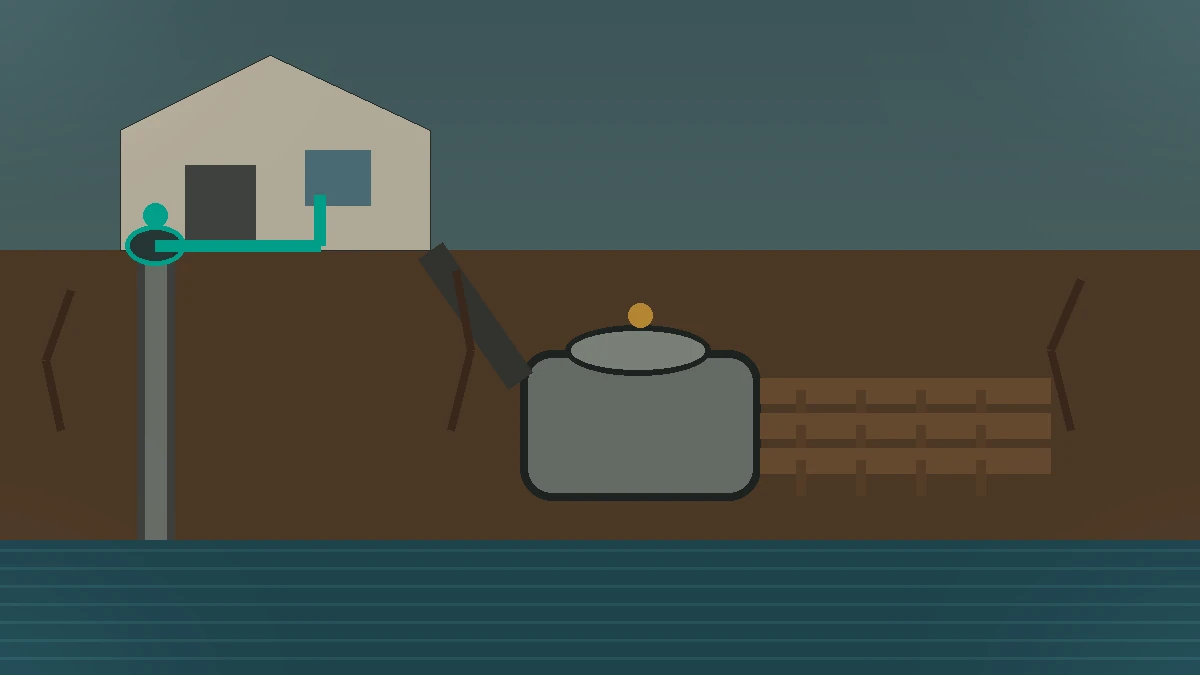
A property can look fully functional while important septic or well questions remain unanswered. Toilets may flush, faucets may run, and the yard may look dry. Those observations do not show the condition of the tank, drainfield, well casing, pump, pressure system, or water quality.
How the two systems work
| System | Basic job | Buyer evidence to request |
|---|---|---|
| Septic tank | Receives household wastewater and allows solids to settle before liquid moves onward. | Accessible tank condition, pumping history when available, baffles, lids, signs of leakage, and inspection findings. |
| Drainfield | Disperses treated liquid into suitable soil. | Location, surface condition, signs of saturation, setbacks, loading, and whether the evaluator observed concerns. |
| Private well | Draws groundwater for household use. | Well location, casing and cap condition, pump operation, pressure behavior, treatment equipment, and available records. |
| Water quality | Determines whether sampled water meets the tested parameters at that time. | Recent laboratory results, sample location, analytes tested, collection method, and any treatment recommendations. |
What to review about the septic system
Florida calls a septic system an onsite sewage treatment and disposal system, or OSTDS. The tank and drainfield depend on design, soil, groundwater conditions, household use, maintenance, and whether later construction changed the site.
- Confirm the system location and whether permit or repair records are available.
- Ask who performed the inspection and what portions were opened, observed, pumped, or excluded.
- Look for backups, slow drains, sewage odors, wet areas, unusually green patches, settlement, damaged lids, or vehicle traffic over the system.
- Ask whether additions, pools, patios, driveways, wells, trees, or grading may affect required setbacks or access.
- Understand whether the system includes pumps, alarms, aerobic treatment, advanced treatment, or operating-permit requirements.
A dry yard does not guarantee a healthy drainfield. A recently pumped tank does not prove the drainfield is performing correctly. Ask the evaluator what the inspection did and did not establish.
What to review about the private well
A private well is not the same as a regulated public water utility. The homeowner is generally responsible for protecting the well and monitoring water quality. Buyers should identify the wellhead, pump, pressure tank, treatment equipment, electrical controls, and any visible damage or unsanitary conditions.
- Check whether the well cap is secure and whether surface water can collect around the wellhead.
- Ask about well depth, age, construction records, pump repairs, pressure problems, treatment equipment, and recurring staining or odor.
- Confirm whether the sample came from untreated well water or from a faucet after treatment equipment.
- Ask whether nearby land use, flooding, fuel tanks, agricultural activity, saltwater intrusion, or known contamination areas suggest additional testing.
Water testing before a decision
Florida does not require statewide private-well sampling merely because a home is sold. That does not make testing unimportant. The Florida Department of Health recommends that buyers test private well water and identifies coliform bacteria, nitrates, and lead as general purchase-time considerations, with other tests based on the well and location.
A laboratory result is a snapshot of the sampled water and the substances tested. It does not test every possible contaminant, guarantee future quality, or explain the cause of a result. Use a certified drinking-water laboratory and ask the local health department or qualified water professional which tests fit the property.
Records, permits, and future plans
Review available septic permits, repair records, site plans, well records, maintenance documents, and laboratory reports. County environmental-health or DEP records may help, but an old drawing may not prove the current field location or condition.
Future plans matter. Adding bedrooms, increasing occupancy, building an addition, installing a pool, changing drainage, or connecting to public utilities may affect the system, setbacks, permits, and cost. Verify requirements before treating future work as feasible.
Important limits of the review
- An inspection cannot guarantee remaining life or future performance.
- A water test covers only the sample, date, location, and analytes listed.
- Records may be missing, incomplete, or different from field conditions.
- Weather, groundwater, recent pumping, vacancy, occupancy, and treatment equipment can affect what is observed.
- Repair or replacement scope depends on the actual defect, property layout, soils, permits, access, and local requirements.
Do not use a universal replacement cost or life expectancy as the decision. Get property-specific findings and written scopes from qualified professionals.
Questions to ask before closing
- Is this property definitely served by septic and a private well, and where are both systems located?
- What septic components were inspected, opened, pumped, tested, or excluded?
- Are there permits, repairs, operating requirements, alarms, pumps, or advanced-treatment components?
- What water tests were ordered, where was the sample collected, and was it before or after treatment?
- Do the results suggest treatment, disinfection, retesting, repair, or a different sampling plan?
- Could planned additions, bedrooms, pools, driveways, landscaping, drainage work, or higher occupancy affect the systems?
- Which findings need a septic contractor, plumber, well contractor, laboratory, engineer, environmental professional, or county review?
Continue your buyer due diligence
Use the Contractor Homebuyer Guide for the broader property-condition process. Review the four-point inspection guide, the property survey guide, and the mold and moisture guide when the site, utilities, or building condition create related questions.