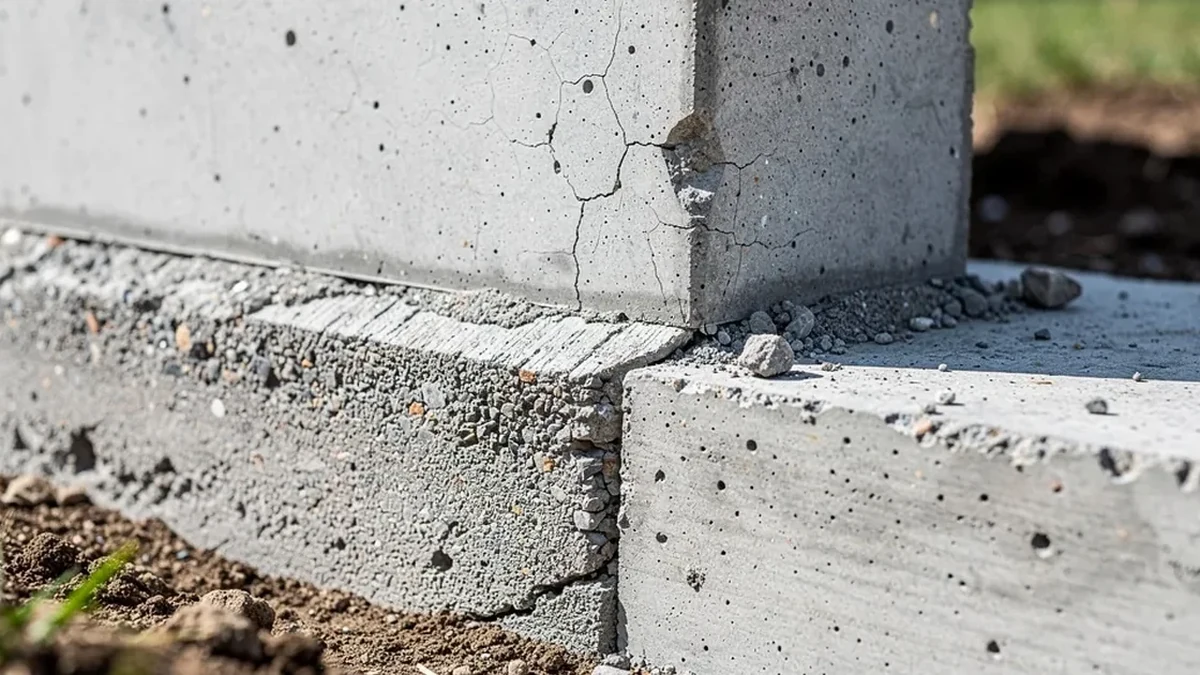
Foundation cracks can look alarming, but appearance alone does not tell the buyer whether the condition is cosmetic, stable, active, structural, or related to another system. Concrete can shrink as it cures. Homes can settle over time. Water, soil, plumbing leaks, tree roots, framing, additions, and prior repairs can also affect what a buyer sees.
How to read foundation and movement clues
| Observation | What it may suggest | Why it is not enough alone |
|---|---|---|
| Fine hairline crack in concrete | Shrinkage, curing, or minor movement may be involved. | Width alone does not show depth, stability, or structural impact. |
| Vertical or stair-step crack | Settlement, movement, or material transitions may be involved. | Pattern, displacement, location, and change over time matter. |
| Diagonal or horizontal crack | Differential movement, loading, pressure, or another condition may require deeper review. | A visual clue cannot determine cause or repair scope by itself. |
| Uneven or sloped floors | Foundation movement, framing, joist, slab, or finish variation may be involved. | Floors should be measured across multiple rooms and compared with construction type. |
| Doors or windows that stick | Racking, settlement, humidity, installation, or ordinary wear may be involved. | One opening does not prove whole-building movement. |
| Gaps at trim, cabinets, tile, or baseboards | Movement may have occurred over time. | Direction, extent, age, and stability must be confirmed. |
Why patterns matter more than one clue
A single crack may be local. A repeated pattern across exterior walls, interior drywall, tile, doors, windows, cabinets, and floor elevations deserves more attention. Buyers should also ask whether the condition appears stable or whether new cracking, widening, separation, or movement has been documented.
- Compare cracks inside and outside the same area.
- Look for displacement, not only width.
- Check whether doors and windows operate consistently.
- Compare floor elevations in several rooms, not one spot.
- Review additions, enclosed patios, converted garages, and structural changes separately.
How water, drainage, and soil can affect movement
Water can change soil conditions around a home. Poor grading, roof runoff, missing gutters, downspout discharge, irrigation, ponding, plumbing leaks, broken drains, and long wet or dry cycles can affect support conditions. Tree roots and removed trees can also change moisture patterns.
A moisture source does not automatically prove that it caused the movement. The goal is to connect observations with site drainage, plumbing history, soil information, construction type, and professional evaluation.
What an inspection can and cannot prove
A general home inspection can identify visible cracks, uneven surfaces, sticking openings, moisture clues, and areas that deserve further review. It may not determine structural cause, soil behavior, concealed reinforcement, footing condition, or future movement.
A dry day, a fresh repair, or a crack that looks small does not guarantee stability. A prior engineering letter or repair invoice is useful, but it should be read with the current condition, repair warranty, permit record, monitoring history, and any seller disclosure.
Why repair scope must follow the diagnosis
Some conditions need monitoring or local repair. Others may involve drainage correction, plumbing repair, slab work, underpinning, helical or driven piers, soil improvement, framing repair, or another engineered solution. The visible crack may be only the finish symptom.
There is no safe universal foundation-repair price or remaining-life estimate. Cost depends on cause, access, construction, soil, engineering, permits, number and type of supports, interior restoration, drainage work, and whether movement is active.
Questions to ask before the inspection period ends
- What crack and movement patterns were observed, and where do they align?
- Is there measurable displacement or floor-elevation change?
- What construction type and foundation system does the home have?
- What drainage, plumbing, irrigation, tree, or grading conditions may be relevant?
- What prior repairs, permits, engineering reports, warranties, or monitoring records exist?
- What can the current inspection confirm, and what requires an engineer or other specialist?
- Does the proposed repair address the suspected cause or only the visible finish?
Continue your buyer due diligence
Use the Contractor Homebuyer Guide for the broader property-condition process. Review the approved stucco and water-intrusion guide, the South Florida inspection red-flags guide, the property survey guide, and the mold and moisture guide when the movement pattern raises broader questions.

