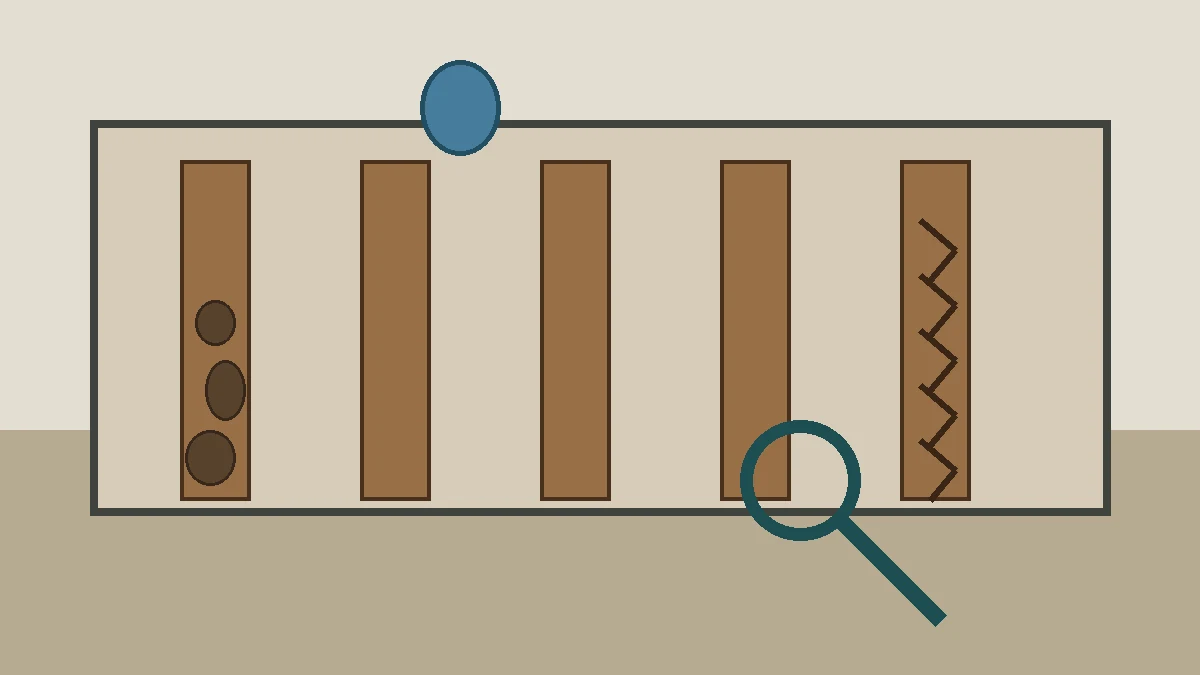
Wood rot and termite damage can both weaken framing, trim, fascia, decking, subfloors, cabinets, door frames, and other wood components. They are not the same condition. Rot is commonly linked to sustained moisture and fungal decay. Termite damage comes from wood-destroying insects. A property can have one, the other, or both.
Start with the cause, not the label
| Clue | What it may suggest | Why it is not enough alone |
|---|---|---|
| Soft, darkened, cubical, stringy, or crumbling wood | Moisture-related fungal decay may be present. | Surface condition does not show depth, cause, or structural significance. |
| Mud tubes, galleries, frass, wings, or live insects | Termite or other WDO activity may be possible. | The species, activity status, extent, and treatment history require licensed review. |
| Water stains, failed sealant, roof or plumbing leak | A moisture source may be feeding decay or attracting pests. | A dry day does not prove the source is corrected. |
| Fresh paint, patching, sistered wood, or replaced trim | Prior repair may have occurred. | Cosmetic work does not prove the moisture, pest activity, or damaged structure was fully addressed. |
What wood rot means
Wood decay is driven by fungi when wood stays damp enough for long enough. The phrase “dry rot” can be misleading; sustained moisture or poor ventilation is usually part of the story. Buyers should ask where the water came from, whether the source was corrected, how far decay extends, and whether affected structural wood was repaired.
What termite or WDO evidence means
Florida regulates termite and other wood-destroying-organism services through FDACS. A WDO inspection is performed by an appropriately licensed pest-control professional. It can document visible evidence and conditions within the inspection scope, but it does not replace an engineer, contractor, roofer, plumber, or other trade needed to evaluate and repair construction damage or moisture entry.
Why both conditions can appear together
Leaks, wet soil contact, failed flashing, poor drainage, trapped moisture, or neglected exterior wood can create conditions favorable to decay and some pests. Treating termites does not rebuild damaged wood. Replacing wood without correcting moisture or active pest conditions can leave the cause unresolved.
Build a two-track review
- Track 1 — WDO: licensed inspection, organism/activity evidence, prior treatment, warranties, conducive conditions, and recommended pest-control scope.
- Track 2 — Building condition: moisture source, depth of decay, affected components, structural significance, access limits, repair design, permits, and trade estimates.
A clean-looking area after treatment does not guarantee concealed framing is undamaged. A construction repair does not prove the property is free of active WDO conditions.
Documents to request
- Current and prior WDO inspection reports
- Treatment contracts, diagrams, warranties, renewals, and transfer terms
- Roof, plumbing, window, stucco, drainage, and moisture-repair records
- Permits, invoices, photographs, and engineering or contractor reports
- Seller disclosures and insurance-related inspection records
What one report does not prove
- A WDO report does not determine every concealed structural repair.
- A moisture reading is a snapshot, not a guarantee the area has never leaked.
- Old treatment records do not prove current activity is absent.
- Fresh wood or paint does not prove the cause was corrected.
- There is no safe universal treatment price, repair cost, or remaining-life estimate.
Questions to ask before closing
- What evidence supports rot, termites, another WDO, or a combination?
- Is activity current, prior, inaccessible, or uncertain?
- What moisture source or conducive condition remains?
- Which components need opening, probing, engineering, treatment, or replacement?
- Who is responsible for treatment, repair, permits, warranties, and reinspection?
- What does the contract allow during the inspection and decision period?